
Double Eyelid Surgery (Double Blepharoplasty)
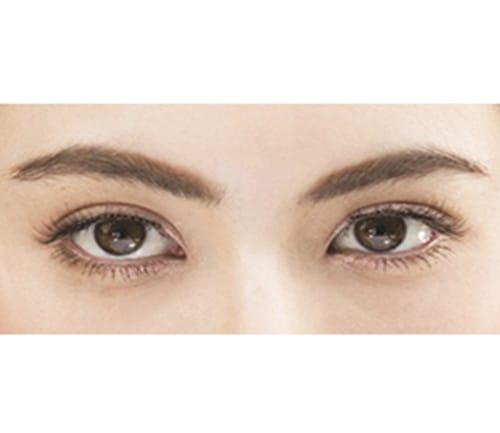
The majority of Asians have upper eyelids that appear to be taut from brow to lashes, rather than segmented by a crease. Asian blepharoplasty patients often request the creation of an upper eyelid crease, or "double eyelid," which uncovers a portion of the natural eye contours, making the eyes slightly larger, rounder and more amenable to makeup, as well as exposing more of the eyelashes. Most patients are interested in the creation of an eyelid crease, called the double eyelid operation.
The Surgery
There are two main techniques: one is "Non-incisional" techniques that involve a few small incisions (thus, not really non-incisional) rely instead on the placement sutures within the eyelid. In young patients, this can often be accomplished with no incision or cutting. Sutures are passed inside the eyelid to create a new crease. The crease must be placed precisely and delicately. No substantial anatomical change is created.
The another approach is incisional technique. Skin, fat, orbital septum, and muscle are thinned, although removal is more conservative. A "deep fixation" suture closure is used. The result is usually permanent.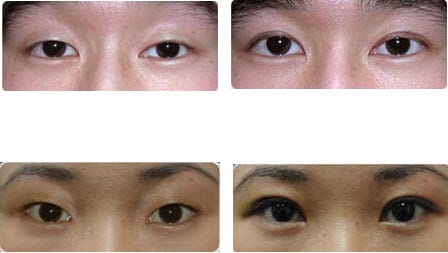
After surgery, Your eyelids may feel tight and sore as the anesthesia wears off, but you can control any discomfort with the pain medication prescribed by your surgeon. If you feel any severe pain, call your surgeon immediately.
Your surgeon will instruct you to keep your head elevated for several days, and to use cold compresses to reduce swelling and bruising. (Bruising varies from person to person: it reaches its peak during the third day, and generally lasts anywhere from one weeks to a month.) You'll be shown how to clean your eyes, which may be gummy for a week or so. Many doctors recommend eyedrops, since your eyelids may feel dry at first and your eyes may burn or itch. For the first few weeks you may also experience excessive tearing, sensitivity to light, and temporary changes in your eyesight, such as blurring or double vision.
Your surgeon will follow your progress very closely for the first week or two. The stitches will be removed two days to a week after surgery. Once they're out, the swelling and discoloration around your eyes will gradually subside, and you'll start to look and feel much better.