
Buttock Augmentation
Buttock augmentation, or butt implants, involves the surgical insertion of artificial implants into the buttocks in order to enhance their size and shape. This surgery is frequently sought by women who are unhappy with the size of their buttocks. Some feel their buttocks lack shape, while others want to have a more sensuous backside by making them larger and rounder.
Butt implants is usually quite successful at making the butt larger and shapelier. This has helped many women gain that more sensuous appearance. For those that have had underdeveloped buttocks, buttock implants can now provide them with a more proportionate figure. Not only has this helped enhance their appearance, but also many have gained a boost in their self-esteem and self-confidence
The Best Candidates for Buttock Augmentation
In general, the best candidates for buttock augmentation are:
• 18 years of age or older
• In good physical health
• Psychologically stable
• Wanting to improve their appearance
• Realistic in their expectations
• Having this surgery for the first time
The above is only a partial list of the criteria that your surgeon will consider in determining whether or not this procedure is appropriate for you. Be sure to ask your surgeon if he/she considers you an ideal candidate for buttock augmentation.
Type of Anesthesia
Most likely, the anesthesia you receive will be general, although some doctors use a local anesthetic along with a sedative. Anesthesia type should be discussed with your doctor during the initial consultation.
The Surgery
An incision may be made in any one of the following places: where the cheek meets the back of the thigh, or down the buttock crease. The incision is usually made in the buttock crease, where scars are not noticeable.However this area does carry a high infection risk.
The doctor then creates a pocket large enough to insert the butt implants. The implants can be placed either under the gluteus maximus muscle, or on top of the muscle.
Sometimes, the doctor performs liposuction in order to further enhance the shape of the buttocks.
After performing the same procedure on the other buttock, the doctor makes sure the buttocks are symmetrical and look natural. Then he/she stitches up the incisions.
Buttock implant surgery usually takes about two to three hours to complete. The length of the procedure varies according to the technique used, the placement of the implants, the patient’s anatomy, and type of anesthesia used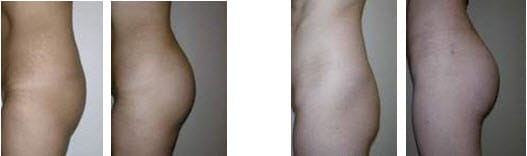
After Your Surgery
Buttock augmentation stretches the tissues, and can be painful. This is especially true when the implants are placed under the muscle. The pain is greatest within the first 48 hours, but improves with each day and is somewhat relieved by pain medications. In spite of the initial discomfort, most women report that they are very satisfied with the results of the surgery.
When you wake up you will feel tired, sore, and stiff. It is important to take the medication prescribed to you by your doctor. Someone will need to drive you home, and you may need assistance at home over the next couple of days.
Your surgeon may prescribe an antibiotic and an anti-inflammatory medication to be taken after the surgery. It is a good idea to have these prescriptions filled beforehand.
You will have a compression garment on after surgery to provide support, which should not be removed for the next few days following surgery.
Expect to be in bed in the upside-down position for the first 24 hours after surgery
Getting Back to Normal
It is critical that you review post-procedure care with your doctor. Following his/her instructions carefully will help ensure you have a speedy, healthy recovery. Also keep in mind that:
• Rest in bed in the upside-down position for the next 7-10 days after surgery is important to the healing process, so do it as much as possible following your procedure. Drink plenty of fluids, and be sure to take the doctor's prescribed medications.
• Most likely, you will be able to resume calm, quiet work within a few days to weeks following butt implants surgery. You should still avoid physical exertion for several weeks, depending on the advice of your doctor.
• The stitches will come out within ten to fourteen days, but swelling may continue, gradually subsiding over several weeks. As the swelling subsides, the results will become more apparent.
• You will probably be able to resume exercise and normal physical activities within a month or two, when the soreness has subsided. Recovery varies from patient to patient and depends upon the technique, type of implant, and site of placement that the doctor uses, as well as the level of activities in your daily routine. Ask your doctor for more specific information.